

If you run a home or decor business in Petaling Jaya (PJ), you’ve probably heard agencies promise “more traffic” or “more awareness.” That’s rarely the real problem. The real problem is getting the right people to take the next step: book a site visit, request a quote, or buy—without wasting ad budget.
A home & decor digital marketing agency in pj should be doing specific, practical work that ties to revenue. Not just posting pretty photos. Not just “running ads.” The job is to build a repeatable system that turns attention into enquiries and sales, then improve it month by month.
This guide is an educational explainer: what the agency actually does, what you should expect to see, and what matters most if you care about ROI (return on investment).
- Revenue comes from the full funnel, not one channel
- Tracking and lead quality matter more than “reach”
- Creative and landing pages usually decide your ROAS

The core job: turn demand into measurable enquiries and sales
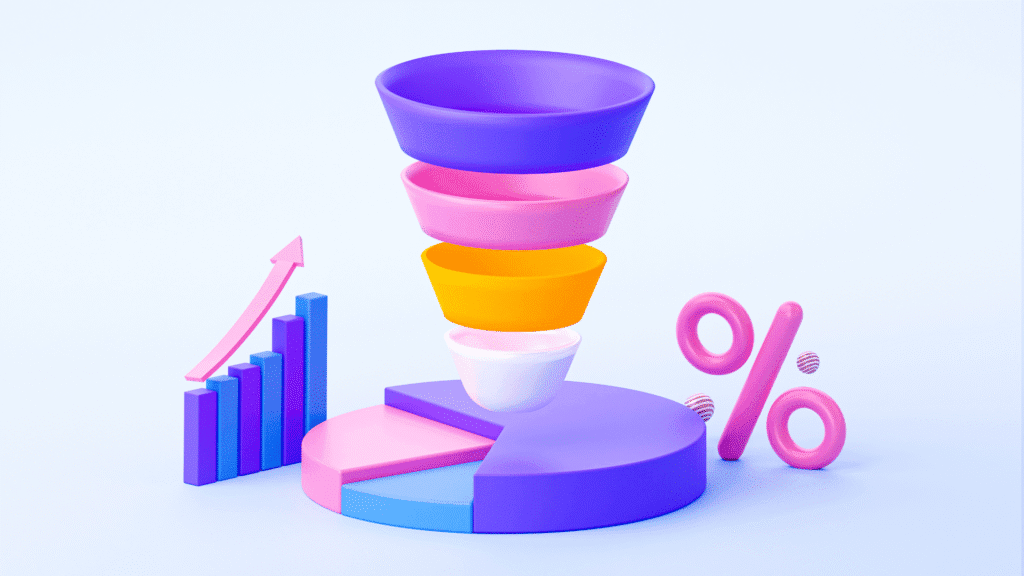
A good agency doesn’t “do marketing” in the abstract. It builds and manages a funnel. A funnel is simply the steps from someone seeing you to becoming a paying customer.
For home & decor, the funnel usually has longer consideration. People compare styles, pricing, timelines, and trust. That means the agency’s work should focus on reducing friction and improving confidence at each step.
What this looks like in real execution
Example: a kitchen cabinet brand in PJ may get lots of messages from people asking for “price.” If the agency only optimises for message volume, you’ll get more low-intent chats. If it optimises for qualified leads, you’ll get fewer but better enquiries (budget, location, timeline).
The difference is not luck. It’s how the ads are structured, what the creative says, and what questions are asked before a sales rep spends time.
Channel work: what they do on Meta, Google, and TikTok (and why)
Most home & decor growth in PJ comes from a few paid channels. “Paid” means you pay for placement and can scale faster than organic. Each channel plays a different role.
Meta Ads (Facebook/Instagram): demand creation and retargeting
Meta is strong for visuals and for reaching people before they search. Retargeting means showing ads again to people who visited your site or engaged with your content, so you stay top-of-mind during their decision window.
What the agency should actually do: test multiple creatives (before/after, walkthrough videos, material comparisons), build audiences (homeowners in PJ, recent movers, engaged shoppers), and set up retargeting that pushes a clear next step (quote form, WhatsApp, showroom booking).
Google Ads: capture high-intent searches
Google is where people go when they’re closer to buying: “interior designer PJ,” “custom wardrobe price,” “curtains installation near me.” Search intent is the reason behind the search, and it’s often stronger than social browsing.
What the agency should do: build keyword groups by service and margin, write ads that match what people want, and send clicks to pages that answer pricing, timeline, and process. If everything goes to a generic homepage, you usually pay more per lead and convert less.
TikTok Ads: volume testing and creative discovery
TikTok can work for home & decor because short videos show transformation fast. But it can also flood you with low-quality leads if the message is too broad.
What the agency should do: treat TikTok as a creative testing engine, then move winning angles into Meta and landing pages. The goal is not “viral.” The goal is a repeatable cost per qualified lead.
Funnel assets: the unglamorous work that drives conversions
For many PJ home & decor businesses, ads are not the main issue. The main issue is what happens after the click.
Landing pages that answer real buying questions
A landing page is the page someone lands on after clicking an ad. It should do one job: help the right customer take one next step.
In practice, strong home & decor landing pages include: clear service area (PJ and nearby), starting price ranges (even if it’s “from”), proof (projects, reviews), process steps, and a simple form or WhatsApp button with expectations set.
Lead forms and WhatsApp flows that filter, not just collect
If you sell higher-ticket work (built-ins, renovation, custom furniture), you don’t want every lead. You want the right leads.
A good agency will add light qualification: property type, budget range, timeline, and preferred style. This reduces wasted follow-up and improves close rate, even if the lead count drops.
CRM and handoff so leads don’t die in the inbox
A CRM is a system to track leads and follow-ups. If you rely on scattered WhatsApp chats, you’ll lose deals you already paid for.
The agency should help define lead stages (new, contacted, site visit, quoted, won/lost) and make sure response time is measured. In home & decor, speed and clarity often beat “perfect design.”
Measurement: what matters most (and what to ignore)
If you can’t measure what happens after leads come in, you can’t improve. This is where many campaigns in PJ look “busy” but don’t grow profitably.
Tracking that connects ads to revenue
Tracking means recording actions people take (form submit, WhatsApp click, call) and linking them back to the ad that drove them. The agency should set up pixels and conversion events (simple tracking codes) and confirm they fire correctly.
For higher-ticket projects, the agency should also set up offline tracking where possible: importing “won” deals back into ad platforms so optimisation is based on real sales, not just leads.
The metrics you should ask for every month
Home & decor owners often get reports full of impressions and clicks. Those are not useless, but they are not the decision metrics.
| What you see | What it tells you | Why it matters for home & decor |
|---|---|---|
| Cost per lead (CPL) | How expensive it is to generate an enquiry | Good for budgeting, but can hide poor lead quality |
| Qualified lead rate | % of leads that match budget/location/timeline | Stops you from scaling low-intent enquiries |
| Appointment/showroom booking rate | % of leads that take a serious next step | Better predictor of revenue than raw leads |
| Close rate | % of qualified leads that become customers | Shows if sales follow-up and offer are working |
| ROAS | Return on ad spend (revenue ÷ ad cost) | Best when based on actual sales, not guesses |
Realistic expectations (so you don’t blame the wrong thing)
If your product is premium, you may never get “cheap leads.” That’s fine if the close rate and average order value are strong. On the other hand, if response time is slow or quotes are unclear, no agency can “ad” its way out of it.
What matters most is alignment: ads promise what your team can deliver, and the follow-up process matches the customer’s decision speed.
What matters most when choosing or managing an agency in PJ
Most founders don’t need an agency that does everything. They need an agency that does the few things that move revenue.
Prioritise these:
- Clear offer and positioning: what you sell, who it’s for, and why you’re the safer choice.
- Creative testing cadence: new angles and formats every month, based on results, not opinions.
- Landing page and lead flow ownership: someone is responsible for conversion, not just traffic.
- Lead quality feedback loop: sales team tags leads, agency optimises based on what closes.
- Reporting that drives decisions: fewer metrics, more actions and next tests.
Conclusion: the practical next step
A home & decor digital marketing agency in pj should be able to explain, in plain language, how it will get you more qualified enquiries and how it will prove those enquiries turn into revenue.
If you’re evaluating one, ask for a simple funnel plan: which channel brings what type of lead, what happens after the click, how leads are qualified, and how results will be measured beyond “leads.”
The best outcome is not more activity. It’s a system you can scale: predictable lead quality, improving conversion rates, and ROAS you can trust.
Frequently Asked Questions
You should expect a clear funnel plan, tracking basics set up, initial campaigns live on the agreed channels, and a plan for creative and landing page tests based on your margins and lead goals.
Google Ads usually brings higher-intent leads because people are actively searching, while Meta Ads is strong for visual discovery and retargeting. Most businesses do best when both are used with clear roles.
Good quality means the lead fits your service area, budget, and timeline, and is willing to take a serious next step like a site visit or showroom appointment. The simplest proof is your qualified lead rate and close rate.
It depends on your average order value, margin, and sales cycle. ROAS is only meaningful when it’s tied to real revenue, not just estimated values, and when you account for how long customers take to decide.
This usually happens when ads attract the wrong audience, the offer is unclear, the landing page doesn’t answer pricing or process questions, or follow-up is slow. Fixing the lead filter and response process often improves results faster than increasing ad spend.
