



Is AI Max Right for You? When It Works And When It Doesn’t
AI Max goes beyond keywords, but is it right for your business? Here’s when AI Max campaigns work well — and when to avoid them.
Table of Contents
Why the AI Max Debate Exists
Google’s AI Max (keywordless SEM targeting) promises to capture intent beyond keywords. For some brands, it delivers cheaper conversions and new customers. For others, it burns budget on irrelevant clicks.
The truth? AI Max isn’t a silver bullet. It works best in certain situations — and not at all in others.
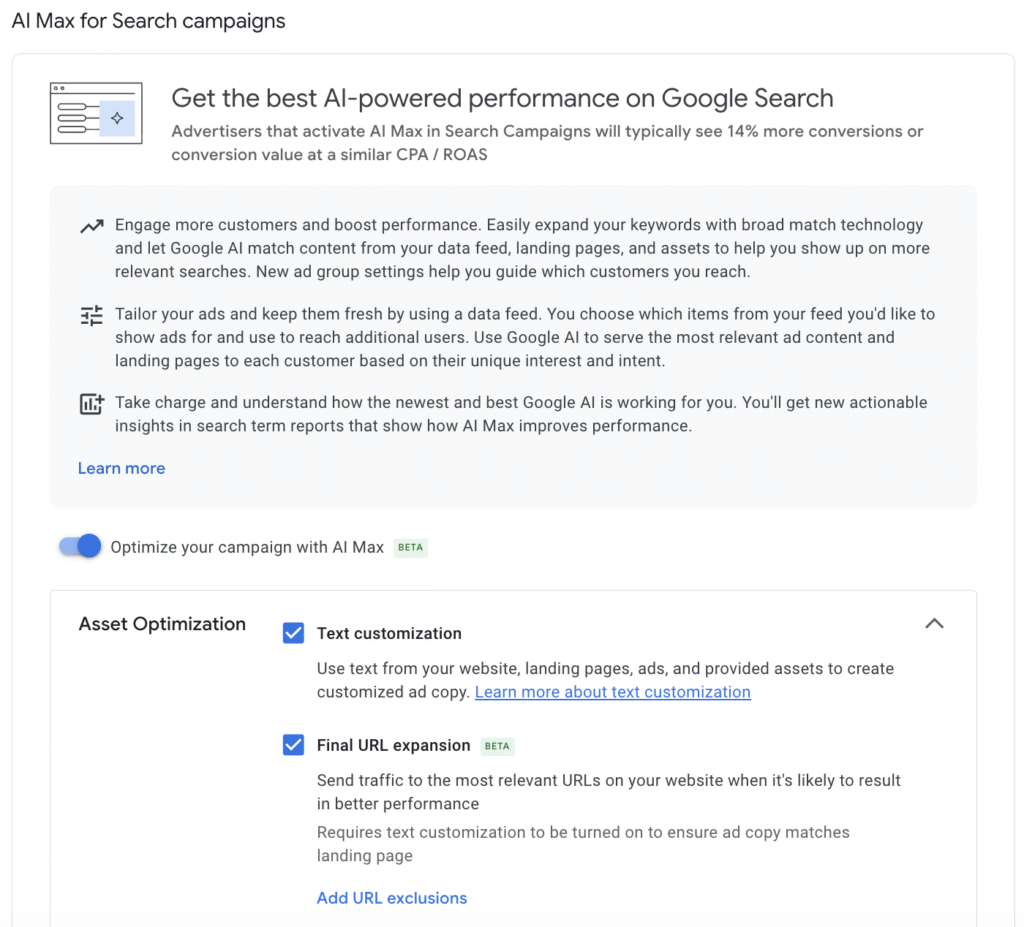
When AI Max Works Well
- You Have Reliable Conversion Data
AI Max learns from your past performance. If your tracking is set up (Google Tag, GA4, enhanced conversions), the algorithm has a clear picture of what a “good lead” or “purchase” looks like. - You Want to Capture New Demand
Traditional keywords target people who already know what to search. AI Max helps discover customers earlier in their journey, even if they’re searching in vague or unexpected ways. - Broad Industries with High Search Volume
E-commerce, F&B, lifestyle, and retail often see good results — because customers use a wide range of queries that AI can learn from. - You’re Already Running Keyword Campaigns
AI Max works best as a complement, not a replacement. Use keyword campaigns for control, and AI Max to expand reach. - You Have a Testing Budget
AI Max campaigns need time and data to optimise. If you can afford to test for at least 2–3 months, you’re more likely to see results.
When AI Max Doesn’t Work
- No Tracking or Weak Data
Without proper conversion tracking, AI Max is flying blind. It may waste money on clicks that never convert. - Highly Niche or Low-Volume Industries
If you sell very specific B2B services (e.g., industrial parts, niche consultancy), AI Max may struggle because there isn’t enough intent data for the AI to learn. - Small Budgets That Can’t Absorb Testing
AI Max usually needs more spend upfront before it optimises. If you’re working with RM1,000/month, stick to targeted keyword campaigns for efficiency. - When You Need Tight Control
For campaigns where every click matters (e.g., high-value B2B leads), AI Max may feel too unpredictable. Manual keyword control is safer. - If You’re in a Highly Regulated Industry
Sectors like finance, healthcare, and legal may require strict compliance. AI Max’s broad targeting can bring risks with irrelevant or sensitive placements.
Best Practice: Use AI Max as a Layer, Not a Replacement
Instead of asking “Should I switch everything to AI Max?”, think:
- Keep keyword campaigns for high-intent, predictable searches.
- Use AI Max to expand reach and discover new intent signals.
- Compare performance and scale whichever drives the best ROI.
- Keep keyword campaigns for high-intent, predictable searches.
Final Thoughts
AI Max isn’t dead-on-arrival, nor is it a magic fix. It’s a powerful tool — but only if you use it in the right context.
- Works best when: you have strong conversion data, testing budget, and broad industries with high intent.
- Doesn’t work when: you’re niche, under-tracked, or need strict control.
👉 If you’re running SEM in 2025, the smartest approach is balance: keywords for control, AI Max for discovery. Together, they give you the best of both worlds.