
ChatGPT Ads launched in Malaysia in 2026. By October 2026, real campaign data was available for analysis. With an average CPC of RM 1.45, a 2.4% CTR and a fast-learning optimisation phase, the channel shows genuine promise. However, conversion measurement requires careful setup before any budget is scaled.
Analysis of Data
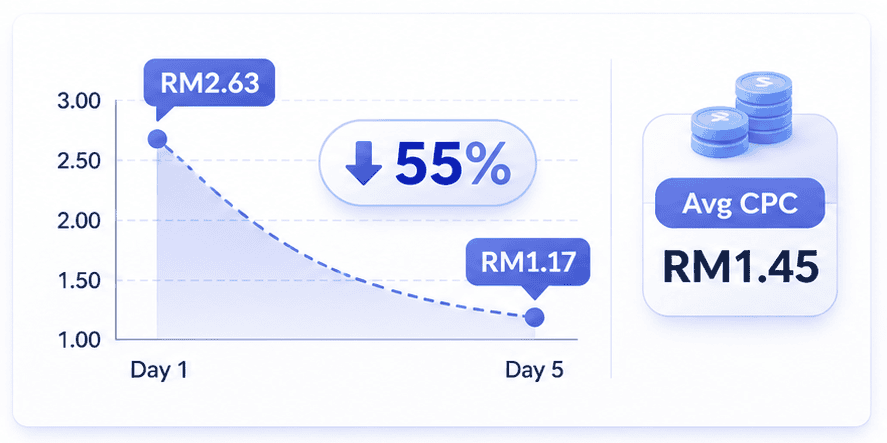
A Malaysian ChatGPT Ads campaign was run between 29th September and 4th October 2026. Two advertisements were displayed; one related to GEO (Generative Engine Optimisation) and the other to SEO. These results provide a good foundation on which to base expectations for the first week of testing.
Data source: Cleverus Malaysia: ChatGPT Ads Results: First Week
Whilst both ads were shown, the GEO ad had a better CTR (2.6%) and vastly greater conversions in Ads Manager, than the SEO ad (2.0%). Content relevance to a user's specific search is important. Not all brand advertising will be of equal effectiveness on this channel.
Day 1: RM 2.63 | Day 5: RM 1.17. This is a 55% cost decrease within just one week. ChatGPT Ads does indeed learn and this occurs quickly. Avoid assessing this channel before day 3.
ChatGPT Ads is denominated in Malaysian ringgit. There is no need for currency conversion. With an average CPC of just RM 1.45, this is affordable for businesses that would not usually be able to invest in high-competition Google Search advertising.
Sources of ChatGPT Advertising Traffic
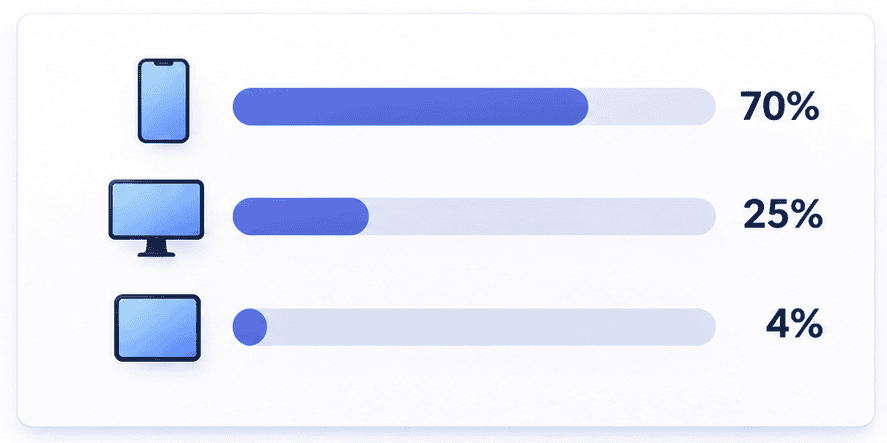
The main source of ChatGPT advertising traffic is not from desktop computers, but from mobile apps. Consequently, your mobile landing page needs to be quick and have a clear call to action.
How to Overcome Conversion Measurement Issues and Avoid Premature Scaling
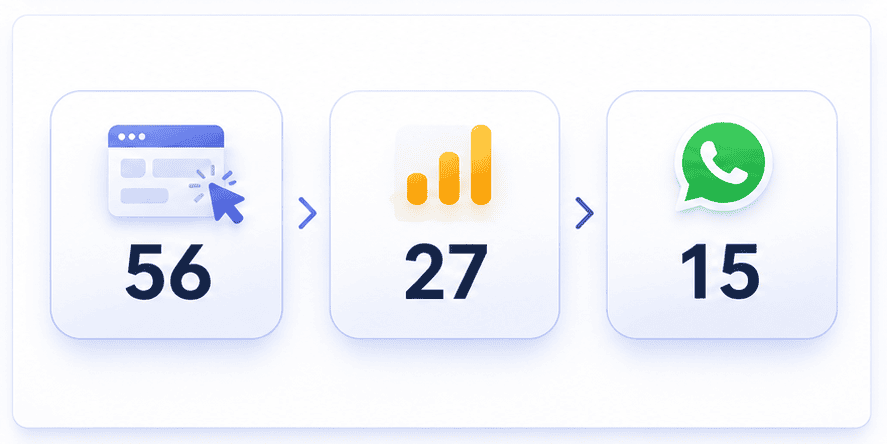
Whilst many factors relating to ChatGPT Ads are important, arguably the most crucial issue to resolve prior to scaling is conversion measurement. This is the primary cause of premature scaling, subsequent financial loss and often, finger-pointing at the platform.
56 conversions were shown to have occurred during the campaign period. This would appear to demonstrate a healthy return on investment and would incline most advertisers to boost expenditure.
Whilst 27 conversions were measured in Google Analytics for the same traffic, only 15 people clicked on the WhatsApp call-to-action. Just 1 lead enquired about a free audit and 0 completed a contact form.
As with Google and Meta, there is a difference between conversions identified by ChatGPT Ads and those confirmed by other methods. However, this variance is more marked on newly-launched platforms as attribution methodologies continue to evolve. Therefore, do not boost your ChatGPT Ads expenditure until you are confident that your Ads Manager, Google Analytics and business (WhatsApp, contact form, CRM) conversion measurements are in-line.
- Ensure that URLs used for ChatGPT Ads include UTM coding (utm_source=chatgpt, utm_medium=cpc and utm_campaign=[name]).
- Create a specific ChatGPT conversion measurement in GA4. Don't depend solely on the standard goal measurement function.
- Only measure real conversions (i.e. WhatsApp calls-to-action, contact forms and telephone calls), and avoid measuring page views.
- On a weekly basis, analyse your ChatGPT Ads, Google Analytics and business (WhatsApp, contact form, CRM) conversion data.
- Avoid scaling expenditure until these data sources are reasonably consistent.
ChatGPT Ads is still in early development. In comparison to Google and Meta, its measurement functionality is not as advanced. During the initial 30-60 days, adopt a data-gathering approach. Your priority is to analyse this channel, not necessarily to maximise volume.
What Value Was Actually Generated?
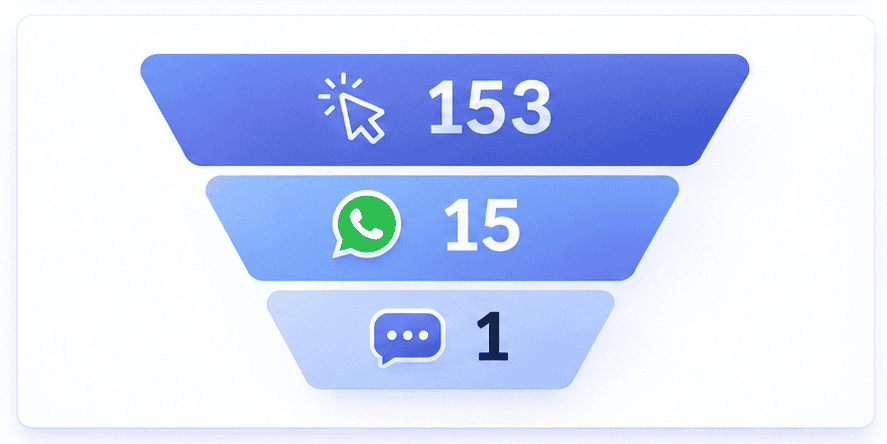
Beyond data provided by the platform itself, it is useful to analyse the true value created by a campaign. The Cleverus campaign incurred around RM 222 (153 clicks x RM 1.45 average cost per click) over 6 days. This resulted in:
Data source: Cleverus Malaysia: ChatGPT Ads Results: First Week
No contact forms were completed. So, in this instance, only the WhatsApp call-to-action resulted in a conversion. If there had been no WhatsApp call-to-action and only a contact form, then just 1 lead would have been captured for the expenditure incurred.
Of interest is that the GEO-targeted advertisement outperformed the SEO-targeted ad in both CTR and Ads Manager conversions. As well as CPC, the relevance of your advertising to an individual's search will also influence the cost per conversion. Consequently, broad-brush brand advertising will generally carry a much higher cost per conversion than advertising that is specifically related to someone's search.
From a return on investment point of view, for a business services company, the RM 13.90 incurred per WhatsApp call-to-action is favourable when compared to mid-range Malaysian Google Search CPC rates for similar services. Typically, Google Search leads are more purchase-ready than those from ChatGPT Ads, which are largely in an information-seeking or evaluation stage. Consequently, the efficiency and quality of your WhatsApp engagement is vital for ROI. You use ChatGPT Ads to encourage WhatsApp call-to-action clicks and your workforce to convert leads.
Also note that the 6,300 impressions were shown to a focused and relevant audience. With a CPM rate of just RM 39, ChatGPT Ads enables high-quality brand advertising to be shown to people who are actively seeking information relating to your area of expertise. This represents an audience quality that is markedly superior to that available through conventional display and social media advertising.
Comparing Paid and Organic ChatGPT Citations: Impact on Engagement
Amongst the key initial insights is that there is a behavioural distinction between people clicking on a paid ChatGPT ad, and those who visit your website as a result of being organically cited by ChatGPT within an answer.
Source: Cleverus Malaysia: ChatGPT Ads Results: Week 1
People coming to your site as a result of organic ChatGPT citing engaged with it almost 5x longer than those clicking on paid ads. This demonstrates the value of utilising both advertising types concurrently. Paid advertising ensures your brand is seen by people who might not have come across it organically. Organic citations engender high-trust which in turn underpins conversions. People seeing your business cited by ChatGPT and then seeing your paid ad in the same session has a greatly enhanced combined impact.
Malaysian Business Sectors to Trial Now
Whilst some business sectors are more appropriate to test ChatGPT Ads currently, others are hindered by platform policy or lack of audience behaviour congruence with the platform's area of strength in Malaysia.
| Business Type | Readiness | What to Do |
|---|---|---|
| Property, education and business services | Suitable for trial | High-intent enquiries are highly relevant to this advertising type. Test with a modest budget (between RM 500 and 1,000). Ensure you implement suitable tracking and allow a minimum 30 day test period before analysing outcomes. |
| Online retailers (E-commerce) | Suitability depends on circumstances | If mobile product pages are able to load swiftly and purchase tracking is in place, then this can be suitable. However, given current CPC rates, it is not advised to test this for low-margin, commodities-based retailing. |
| Cafes, salons and local businesses | Suitability depends on circumstances | Optimise mobile page loading speed. Also ensure your WhatsApp response process is in place prior to incurring costs. This advertising type will favour businesses that can respond rapidly as poor response time negatively impacts conversion. |
| Finance and health care | Suitable for trial once policy is analysed | Presently, OpenAI does not allow finance and health related advertising outside the USA. Confirm that your business sector is permitted under OpenAI's usage policies before developing advertising. |
| Legal services | Currently unsuitable | Globally, legal related advertising is not allowed on ChatGPT at present. Continue to review OpenAI policy as the platform develops. This prohibition may be lifted in future. |
ChatGPT Ads in Malaysia
Malaysia has an average cost per click (CPC) of only RM 1.45 and this continues to fall so ChatGPT Ads is shown to currently provide good value for money for Malaysian businesses, in particular those operating within the service, education and B2B sectors. Together with easy access, a key advantage is that the customers reached are of high quality and are even further refined by their intentions. Despite these positive features however, ChatGPT Ads is still in its early stages and appropriate management is necessary to ensure reliable data can be obtained.
Malaysian businesses which are most likely to benefit from ChatGPT Ads are those with sensible expectations. Remember to utilise the first 60 days to optimise your offering and not immediately to generate revenue. Ensure your mobile site is optimised before spending money. Furthermore, ensure strong data collection procedures are in place for Ads Manager and Analytics alongside your own data collection methods. Alongside this, consider how ChatGPT Ads complements your existing paid channels, Meta and Google, as part of a consolidated performance marketing strategy.
At present in Malaysia, ChatGPT Ads remains an early-mover opportunity. CPCs are low, competition is limited and the platform is still learning how to serve Malaysian audiences. Businesses that test, track and optimise now will have a structural advantage over those who wait until the market matures and costs rise.
Ready to Trial ChatGPT Ads?
We support Malaysian companies to correctly manage the data collection, mobile optimisation and analysis of their ChatGPT Ads from the outset.
Contact Us