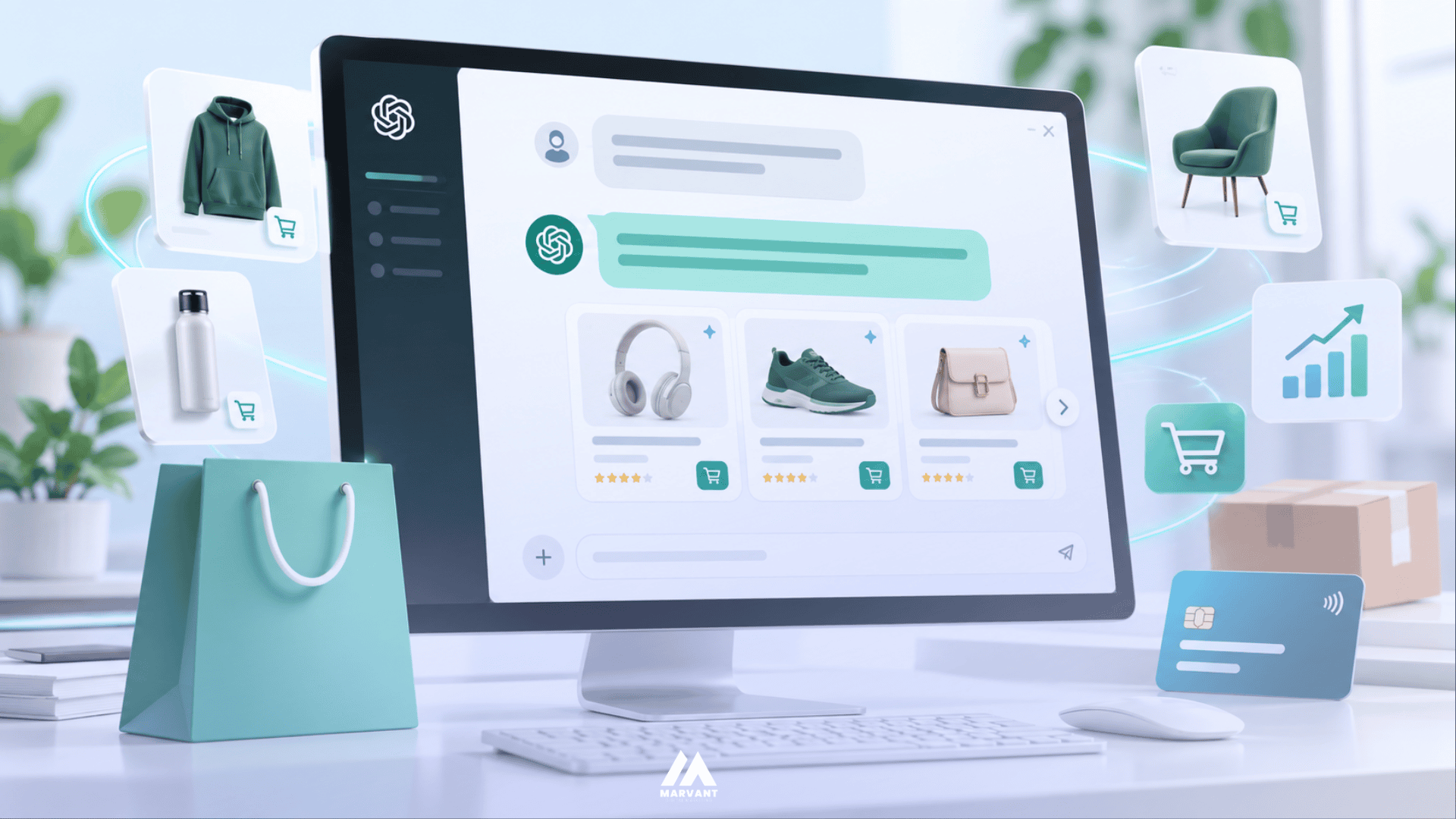
When someone opens ChatGPT and types "what is the best air fryer under RM500?" or "I'm looking for a comfortable work chair for home office use" — they are not browsing. They are researching with intention. They are narrowing down options, comparing features, and moving toward a purchase decision.
This is the moment ChatGPT Ads was built for. And for Malaysian e-commerce businesses, that moment is now accessible — ChatGPT Ads launched in Malaysia on September 23, 2026, with product feed support, Shopify integration, and a carousel format specifically designed for online stores. Read the full launch details in our post on ChatGPT Ads in Malaysia.
This post covers how ChatGPT Ads works for e-commerce, what product feed campaigns are, how to connect your store, and which types of Malaysian online businesses should start testing it now. For a full platform overview, see our guide on what ChatGPT Ads are and how they work.
Why E-Commerce Is a Natural Fit for ChatGPT Ads
Most digital advertising reaches people before they are ready to buy — Meta catches them while scrolling, Google catches them when they search. ChatGPT catches them at a different and often more valuable moment: when they are actively researching and forming a decision.
A shopper asking ChatGPT "what features should I look for in a standing desk?" is not browsing casually. They are educating themselves before buying. They want an answer, and they are open to product recommendations that fit. ChatGPT Shopping Ads are product-level ad placements that appear within AI-generated conversations, triggered by buyer intent rather than keyword matches.
For e-commerce businesses, this mid-research moment is where a well-placed product ad can directly influence the final purchase decision — not just build awareness.
What Are ChatGPT Product Feed Ads?
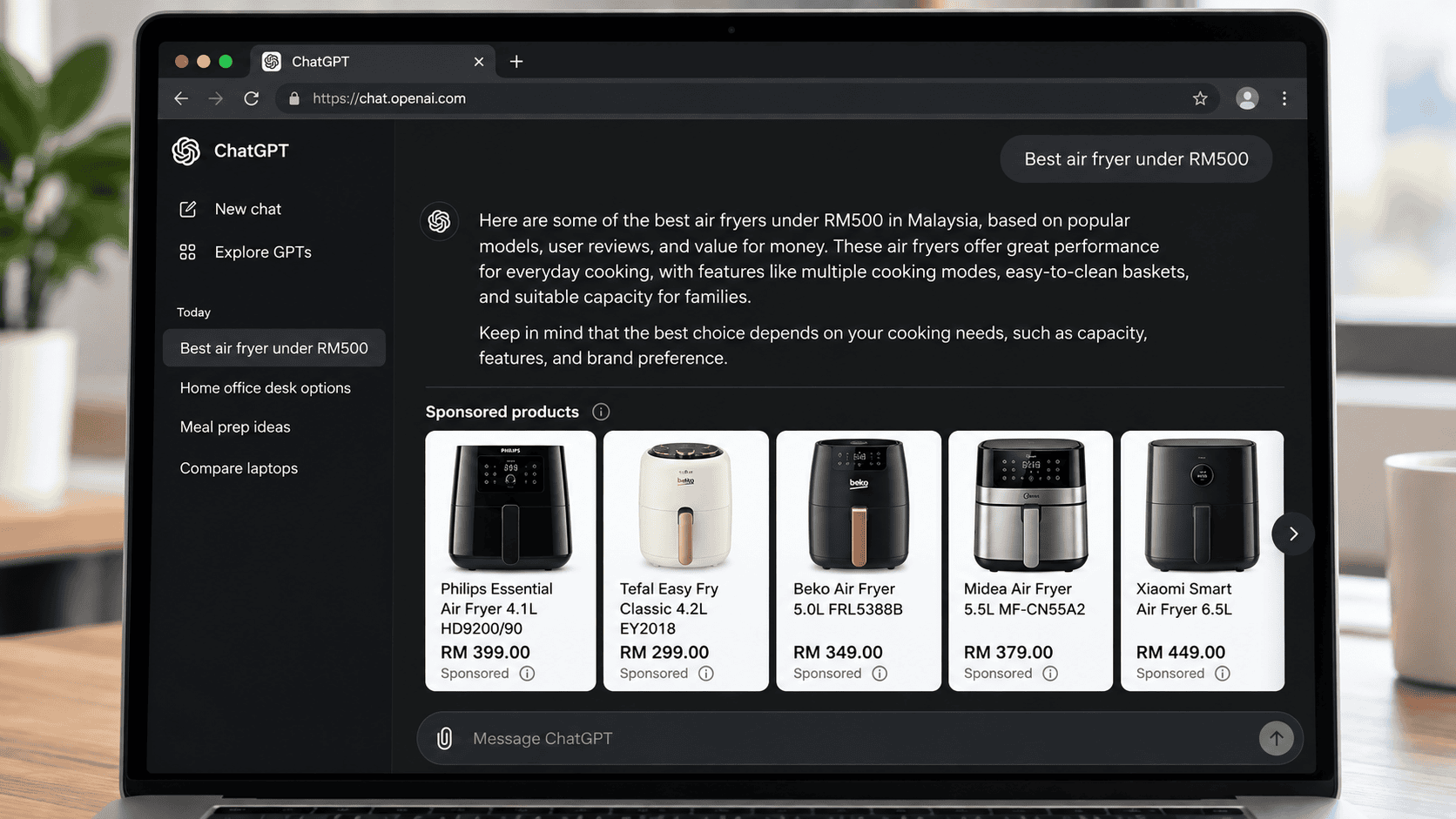
The mockup above shows how ChatGPT product ads appear in practice — a row of sponsored product cards sitting below the AI's answer, each showing a product image, name, and price. The user was researching a product, received an AI response, and now sees relevant product options from brands that have connected their catalog to ChatGPT Ads. This is the placement e-commerce brands are buying into.
OpenAI added a product feed campaign option to ChatGPT that lets merchants generate ads directly from their product catalogs rather than building them one by one, similar to Google Shopping or PMax campaigns. Merchants connect their product catalog, set filters for which products are eligible for advertising, and ChatGPT generates ads from product names, images, and attributes.
This is a significant shift from the earlier manual format — where each sponsored card had to be built individually with a written headline and description. The feed format removes that scalability ceiling. With product feed support, ChatGPT advertising shifts from an experimental channel a few large brands test by hand toward a standard channel alongside Google Shopping.
On September 4, 2026, OpenAI updated ChatGPT Ads so that shopping results inside ChatGPT are now exclusive to brands with connected product feeds. For e-commerce brands without a product feed connected to ChatGPT Ads, products are invisible in shopping results regardless of ad spend, while competitors with feeds capture purchase-intent traffic.
If you run an online store and want any visibility in ChatGPT shopping conversations, connecting a product feed is no longer optional.
How the Product Feed Works
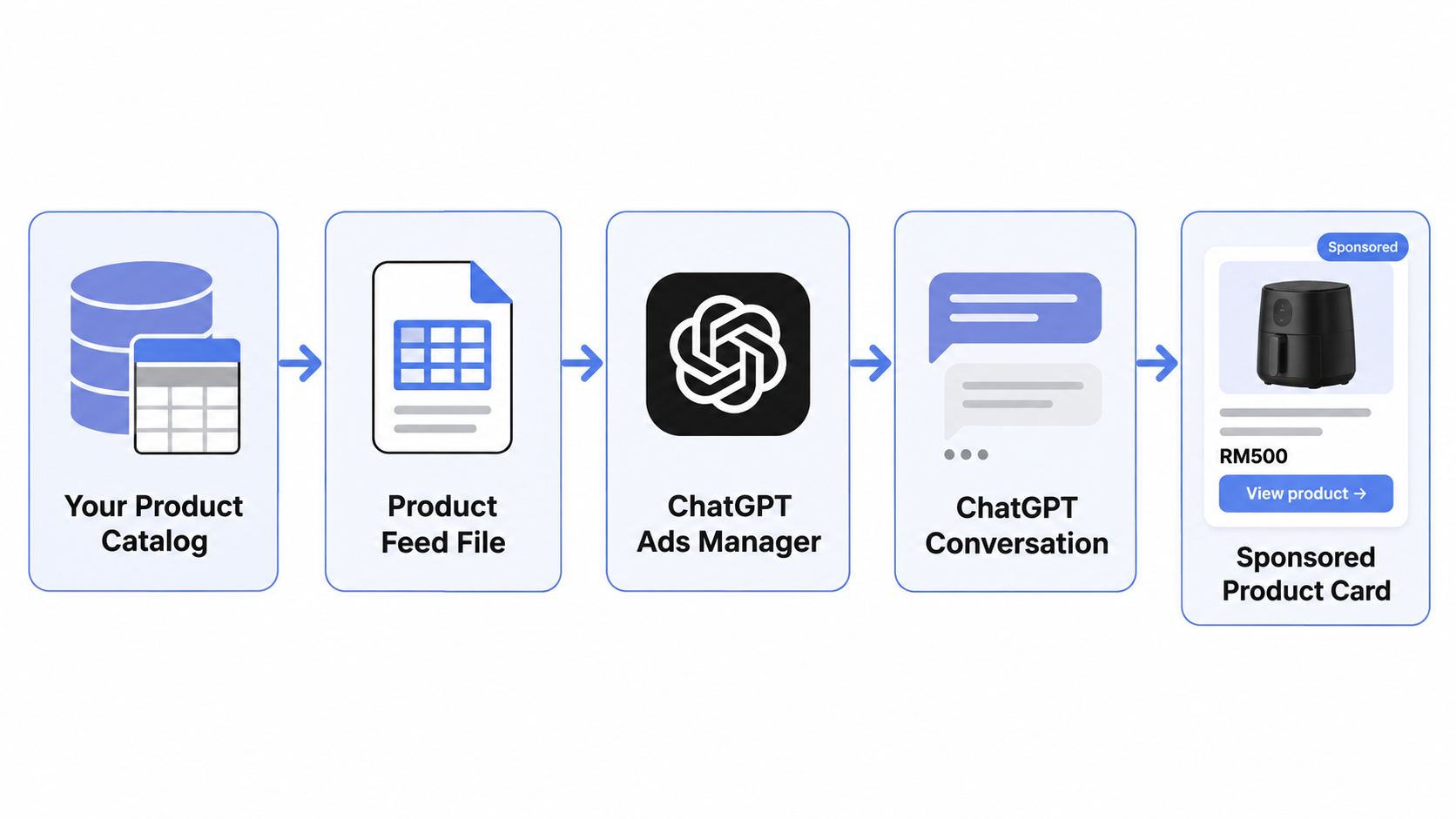
The diagram above shows the full flow — your product catalog connects to a structured feed file, which is submitted to the ChatGPT Ads Manager, which then generates and serves sponsored product cards inside relevant ChatGPT conversations. The process mirrors Google Shopping closely, which means if you already have a feed running for Google, the same file works here with minimal changes.
The critical detail: the feed file required is essentially the same structured file retailers already submit to Google Shopping. Because ChatGPT essentially reuses the Google Shopping feed spec, the quality of your titles, descriptions, categories, images, pricing, and availability data directly determines the quality of the ads ChatGPT generates from it. If your Shopping campaigns underperform today, ChatGPT ads will too — fix the feed before fixing the channel.
| Feed Element | Why It Matters for ChatGPT Ads |
|---|---|
| Product title | Used to generate the ad headline — must be descriptive and specific, not generic |
| Description | Powers contextual matching — richer descriptions help ChatGPT match your product to relevant conversations |
| Images | Appear in the sponsored card — clean, square product images perform best |
| Pricing | Displayed on the ad — must be accurate and up to date |
| Availability | Out-of-stock products are automatically excluded from ads — keep this field current |
| Category / product type | Helps the platform understand where in a shopping conversation your product fits |
Shopify Integration and Non-Shopify Setup
1Shopify Stores
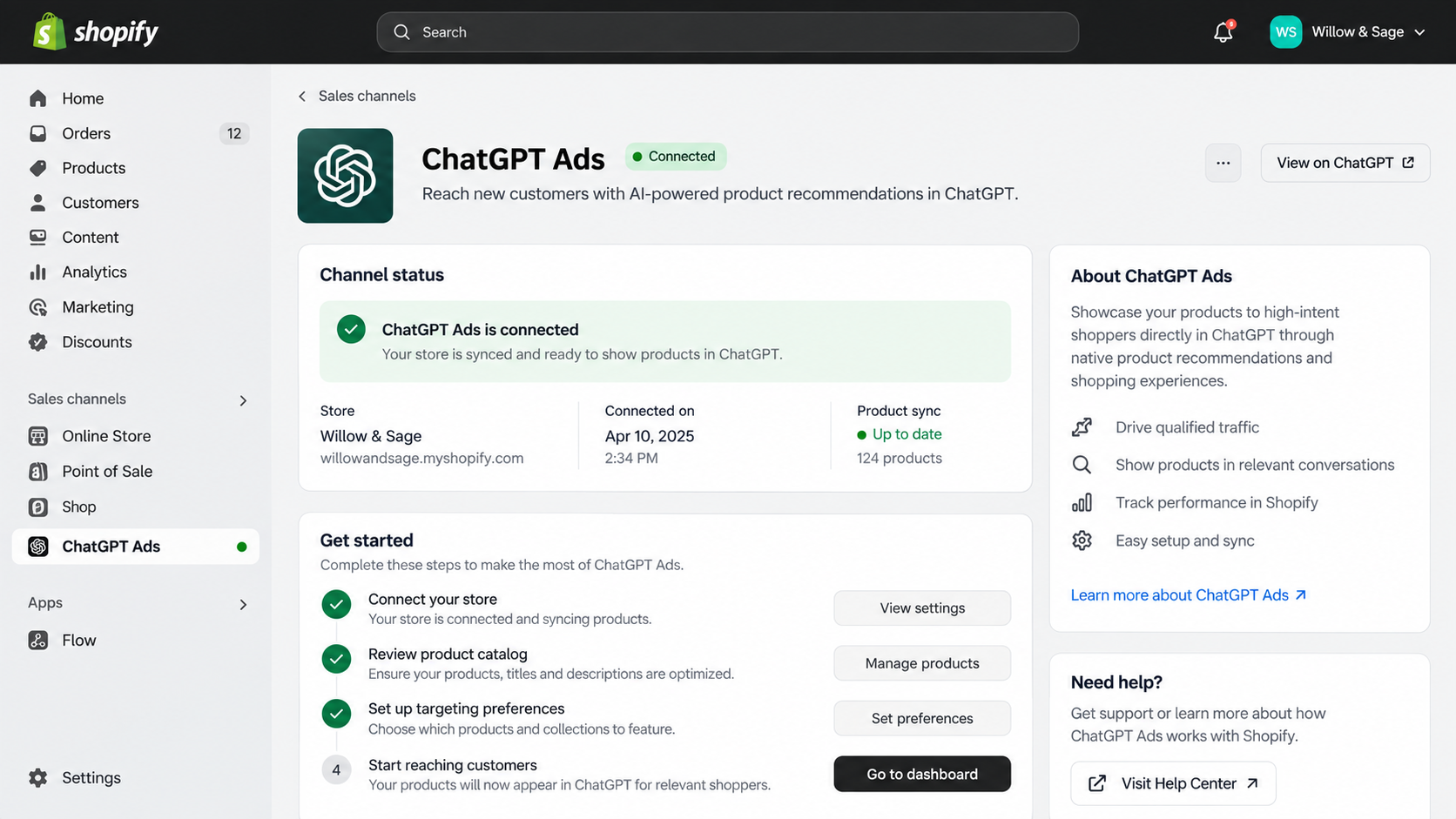
The native ChatGPT integration announced in March 2026 syncs your Shopify catalog directly to OpenAI's ad system. When a product goes out of stock in Shopify, it stops appearing in ChatGPT product spotlights automatically. To enable the integration, navigate to your Shopify admin, go to Sales Channels, and connect the ChatGPT Ads channel.
This makes Shopify the easiest starting point for Malaysian e-commerce businesses. Your existing catalog — products, images, prices, and availability — powers your ChatGPT campaigns automatically once the channel is connected. No separate feed file to maintain.
2Non-Shopify Stores
If you run on WooCommerce, BigCommerce, Magento, or a custom platform, you will need to submit a product feed manually through OpenAI's self-serve ads dashboard. The feed format is the same as Google Shopping — if you already export a feed for Google, that file works for ChatGPT Ads with minor adjustments.
For Malaysian stores on WooCommerce (common among local brands using WordPress), the process is: export your product feed using a plugin like WooCommerce Product Feed or WPAE, upload the file to the ChatGPT Ads Manager, set product eligibility filters, and let the platform generate ads from your catalog.
E-Commerce Ad Formats in ChatGPT
E-commerce brands have access to two ad formats on ChatGPT:
| Format | How It Works | Best For |
|---|---|---|
| Sponsored card (standard) | Single card below the AI answer — brand, headline (16–24 chars), description (32–48 chars), square image, and link. Built manually or from a product feed. | Brand-level campaigns, service-adjacent products, single hero products |
| Product carousel (feed-based) | A carousel ad format launched August 24, 2026, alongside oCPC conversion bidding for product feed campaigns. Multiple products shown in a scrollable format, each with product name, image, and price from the feed. | Category-level campaigns, comparison shopping moments, product range promotion |
Tracking and Measurement for E-Commerce
On August 24, 2026, OpenAI announced conversion-optimized cost-per-click (oCPC) bidding for ChatGPT Ads product feed campaigns, alongside expanded measurement partnerships with Triple Whale, Sonar Optimize, and Hightouch.
For Malaysian e-commerce businesses, what this means practically:
Instead of paying for clicks or impressions, you can optimise toward actual purchase conversions. The platform learns which conversations and products drive sales and allocates budget accordingly.
Install on your store's thank-you or order confirmation page to fire purchase events back to the platform.
Server-side event tracking for more accurate attribution, especially useful for iOS users where browser-based tracking is limited.
If you use Triple Whale or a similar attribution tool, integration is now available for cross-channel attribution that includes ChatGPT Ads spend.
How Malaysian E-Commerce Businesses Can Start
Go to ads.openai.com, create an account, complete billing setup, and verify your business. You need a billing profile and payment method before any campaign can go live.
Shopify merchants: connect via Sales Channels in your Shopify admin. WooCommerce and other platforms: export a Google Shopping-compatible feed and upload it to the Ads Manager product catalog section.
ChatGPT generates ads from your feed data — weak titles, generic descriptions, and low-quality images will produce weak ads. Fix your feed before you launch. If your Google Shopping ads underperform, your ChatGPT ads will too.
Not every product in your catalog needs to run. Start with your bestsellers, highest-margin products, or the category most likely to be researched through AI conversations. Set filters to limit spend to those products first.
Even for feed-based campaigns, context hints tell the platform which conversations your ads should appear in. Describe the research conversation your ideal shopper is having — not just your product category name.
Place the ChatGPT Ads pixel on your order confirmation page before launching. Without conversion data, the platform cannot optimise toward purchases — you will be flying blind on what actually drives sales.
Do not connect a poor-quality product feed and expect good results. Feed quality is the single biggest variable in ChatGPT product feed campaign performance. Spend time enriching product titles, descriptions, and images before you spend any budget. The platform can only work with what you give it.
ChatGPT Ads vs Google Shopping vs Meta Catalogue Ads
| Factor | ChatGPT Ads | Google Shopping | Meta Catalogue Ads |
|---|---|---|---|
| User mindset | Actively researching — mid-decision | High intent — ready to buy or compare | Passive — discovering while scrolling |
| Targeting basis | Conversation context (context hints + product feed) | Search keywords + product feed | Audience interests + product feed |
| Ad format | Sponsored card or product carousel | Product listing with image, title, price, store | Single image, carousel, or collection |
| Feed requirement | Required for shopping visibility (from Sep 4, 2026) | Required | Required for catalogue ads |
| Feed format | Google Shopping-compatible | Google Merchant Center spec | Meta Commerce Manager spec |
| Bidding | CPM, CPC, oCPC | Smart Shopping, tROAS, tCPA, Max Conversions | CPM, CPC, oCPM, cost cap |
| Retargeting | Custom audiences via email/phone upload | RLSA, Customer Match | Website custom audiences, lookalikes |
| Malaysia availability | ✓ Live Sep 23, 2026 | ✓ Available | ✓ Available |
| Funnel stage | Mid-funnel (research and comparison) | Bottom funnel (purchase intent) | Top to mid-funnel (discovery) |
ChatGPT Ads is not a replacement for Google Shopping or Meta Catalogue Ads. It fills a specific gap — the research and comparison moment before a shopper makes their final decision. Think of it as a third channel that intercepts purchase intent earlier than Google and with more context than Meta.
A practical starting point for Malaysian e-commerce: keep Google Shopping for high-intent purchase terms, keep Meta for discovery and retargeting, and use ChatGPT Ads to reach shoppers who are mid-research and still forming their product preferences. For a full breakdown of campaign setup, targeting, and bidding, read our ChatGPT Ads 2026 guide.
Which Malaysian E-Commerce Businesses Should Start Now?
| Store Type | Verdict | Why |
|---|---|---|
| Home decor, furniture, furnishings | ✓ Start now | High research intensity — shoppers compare extensively before buying. ChatGPT research conversations are common for this category. |
| Electronics and tech gadgets | ✓ Start now | Feature comparison is a major pre-purchase behaviour. Shoppers asking "which laptop is best for students?" or "best budget earphones Malaysia" are exactly the audience ChatGPT Ads targets. |
| Health, wellness, supplements | ✓ Start now | Shoppers research ingredients, benefits, and comparisons through AI tools. Strong fit for mid-funnel product discovery. |
| Fashion and apparel | → Test selectively | Works for considered purchases (workwear, formal, occasion wear) — less effective for fast-fashion impulse buying where Meta excels. |
| Beauty and skincare | → Test selectively | Research-heavy category with strong AI adoption. Feed quality and product descriptions are critical — generic feeds will not perform. |
| FMCG / grocery / everyday essentials | → Wait | Low research intensity — shoppers do not typically research commodity purchases through AI conversations. Google Shopping and Meta work better here. |
Sources & Further Reading
- ChatGPT Ads expands to Southeast Asia and Taiwan — OpenAI, September 23, 2026. Official Malaysia launch announcement.
- ChatGPT Ads September 2026: Product Feeds Now Required — Common Thread Collective. Covers the September 4 product feed requirement update and what e-commerce brands must do.
- ChatGPT Ads August 2026: Conversion Bidding and Product Feeds Are Live — Common Thread Collective. Covers oCPC bidding, product carousel format, and measurement partnerships (Triple Whale, Hightouch).
- OpenAI launches product feed ads in ChatGPT — Shopifreaks, May 2026. First coverage of the product feed ad format launch.
- ChatGPT Ads for E-Commerce: How Shopify Brands Can Use Product-Feed Campaigns — Branded Agency, September 2026. Shopify setup walkthrough and product feed guidance.
Frequently Asked Questions
Ready to Connect Your Store to ChatGPT Ads?
Marvant helps Malaysian e-commerce businesses set up ChatGPT Ads product feed campaigns — from feed audit and account setup through to conversion tracking and performance reporting.